Scarless & Single-Port Surgery
Quality Healthcare Solutions
With extensive experience across laparoscopic, GI, bariatric, and abdominal wall reconstruction surgery, care is delivered through a patient-first, evidence-based approach supported by modern technology and structured planning. The focus remains on safer procedures, minimal disruption, and outcomes that stand the test of time
- Modern surgical instruments
- Transparent and streamlined billing systems
- Patient-centred decision-making
Scarless & Single-Port Surgery
Minimal-Scar, Single-Port Laparoscopic Surgery
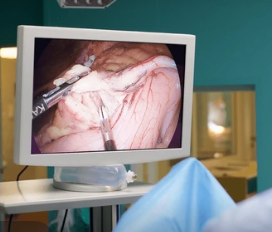
Scarless (single-port) surgery is an advanced form of laparoscopic surgery where many instruments are passed through a single, carefully placed incision, often hidden within the navel.
The goal is to offer the benefits of laparoscopy—smaller cuts, quicker recovery and less discomfort— while further reducing visible scars. Safety comes first, and single-port access is used in selected, suitable cases.
- One key incision, usually camouflaged near or inside the navel
- Fewer visible scars compared to conventional multi-port laparoscopy
- Planned for patients where anatomy and safety clearly allow it
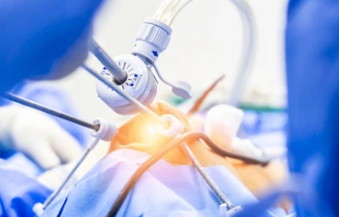
Used in appropriately selected gallbladder, hernia, bariatric and other laparoscopic procedures, when it is safe and beneficial to do so.
Where Can Scarless & Single-Port Surgery Be Used?
Not every case is suitable for single-port access. These are examples of situations where it may be considered, after full evaluation.
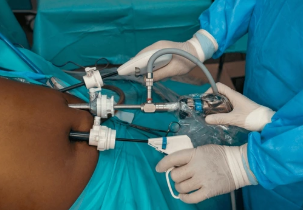
Gallbladder (Cholecystectomy)
Removal of the gallbladder for symptomatic stones in appropriately selected patients.
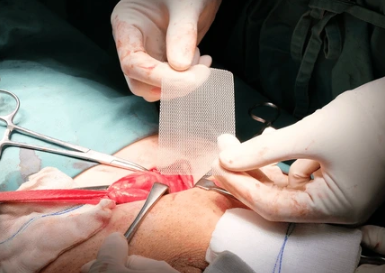
Selected Hernia & Abdominal Wall Cases
Certain hernias can be approached laparoscopically through a single port, when suitable.
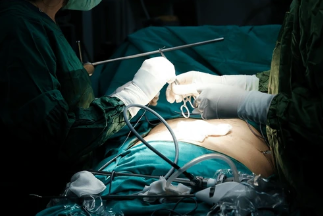
Selected Bariatric & GI Procedures
In experienced hands, some bariatric and GI procedures can be adapted to single-port laparoscopy.
How Scarless & Single-Port Surgery Is Planned
Single-port surgery requires specialised instruments, a different angle of working and a clear safety margin. Not every laparoscopic case should be forced into a single port.
- Assessment of BMI, previous scars, anatomy and type of disease
- Review of imaging (ultrasound, CT, endoscopy where relevant)
- Decision between conventional multi-port, single-port or open surgery based on safety
Key Principles in Single-Port Surgery
A single access point, often within the navel, is used to introduce the camera and instruments.
Multi-channel ports allow camera and instruments to work together from one site.
If safety requires additional ports or conversion to open surgery, that decision is prioritised.
Why Choose Dr. Tapas Mishra for Scarless & Single-Port Surgery?
Single-port surgery needs a balance of laparoscopic skill and judgment. Knowing when not to use a single port is as important as knowing how to do it well.
Advanced Laparoscopic Background
Extensive work in advanced laparoscopy, bariatric and GI surgery forms the base for single-port techniques.
Focus on Minimal-Scar Approaches
Special interest in single-port and scar-conscious laparoscopic procedures, with realistic discussions about feasibility.
Patient Selection & Transparency
Single-port is offered only when anatomy, disease and safety align, with clear backup plans if extra ports are needed.
Post-Operative Comfort & Follow-Up
Emphasis on pain control, wound care, activity progression and scar care, with realistic expectations for healing.
Your Scarless & Single-Port Surgery Journey
This pathway outlines how a typical single-port or minimal-scar laparoscopic procedure is planned and executed for eligible patients.
Initial Consultation
Discussion about symptoms, previous surgeries, medical conditions and expectations.
Imaging & Eligibility Assessment
Review of ultrasound / CT scans and examination findings to assess suitability.
Planning the Surgical Approach
Decision between single-port, multi-port or open surgery with clear backup plans.
Surgery & Hospital Stay
Procedure performed in OT with pain control, early mobility and wound checks.
Early Recovery & Scar Care
Guidelines for wound care, bathing and activity progression to support good healing.
Follow-Up & Review
Follow-up visits to ensure healing, comfort and any further care needed.
Questions About Scarless & Single-Port Surgery
These answers offer a starting framework. Suitability is always decided individually, with safety as the first priority.
Is single-port surgery truly “scarless”?
No. The incision is usually hidden within or near the navel making it far less visible, but a fine scar remains.
Can every patient choose single-port surgery?
Not always; body build, previous scars and disease complexity influence suitability.
Is pain less with single-port than regular laparoscopy?
Pain depends on procedure type and individual factors; single-port may be comfortable for many patients.
What if more ports are needed during surgery?
Extra small ports may be added when needed — it’s a planned safety decision, not a complication.
How long is the hospital stay?
For many straightforward procedures, stays are short — often a few days; complex cases may vary.
Can I share my reports to check eligibility?
Yes — email reports to drtapasmishra@gmail.com for an initial review; an in-person consultation is essential.
Contact Us
Our clinic Address
Odisha, India
CARE Hospitals, Bhubaneswar Unit 4, Hospital Road, Bhubaneswar, Odisha
- +91 9876543210
- drtapasmishra@gmail.com